 seolounge
 TELEMEDICINE, as defined by the Ministry of Public Health’s announcement on the service standards of healthcare facilities using telemedicine services in the year 2021 (announced on January 18, 2021), refers to the provision of medical and public health services by healthcare facilities to service recipients using telemedicine services.
This is for the exchange of beneficial information for consultations, examinations, diagnoses, treatment, disease prevention, health promotion, physical recovery, and for the continuous education of medical and public health personnel.
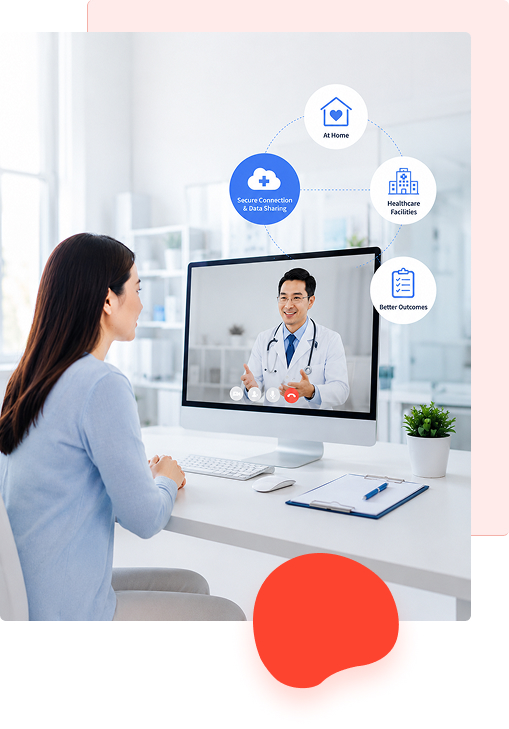
“Telemedicine services” mean the system that utilizes digital means to provide medical and public health services from different locations through the transmission of data, images, and sound or other methods.
TELEMEDICINE, as defined by the Medical Council’s announcement number 54/2563 regarding telemedicine and online clinics (announced on July 9, 2020), means the transmission or communication of current medical content by medical professionals in the field of medicine, both from public and private healthcare facilities, from one location to another through electronic means.
This is to provide consultations, advice, to medical professionals or other individuals for medical actions within the scope of medical knowledge, according to the circumstances, expertise, and conditions. It is the responsibility of the transmitter or communicator of medical content.
TELEMEDICINE has been widely used in patient care, especially during the COVID-19 pandemic. In Thailand, TELEMEDICINE systems have been widely adopted. For example,
The Phra Nakhon Si Ayutthaya Hospital has established a Telehealth Center, setting up the first remote medical consultation room in a state-run hospital over the past year.
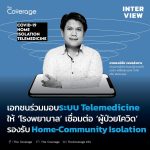
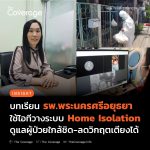
They’ve developed a TELEMEDICINE system to provide services to various patient groups, such as those with kidney disease, diabetes, high blood pressure, and mental health concerns. In recent times, they have used TELEMEDICINE to care for more than 16,000 COVID-19 patients through home isolation. The results have shown that it enables convenient and rapid monitoring of patients’ conditions, with support for chat and video calls. Patients are satisfied because it reduces travel expenses, waiting times, and eases the strain on hospitals.
The Telehealth Center at Phra Nakhon Si Ayutthaya Hospital was developed by www.dietz.asia and supports billing for treatment from the National Health Security Office (NHSO).
Furthermore, TELEMEDICINE at Phra Nakhon Si Ayutthaya Hospital is also being used to assist in monitoring and caring for inmates in correctional facilities, including those with chronic conditions such as diabetes and high blood pressure.
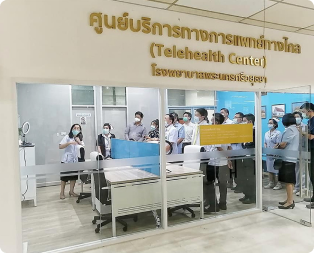
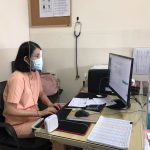
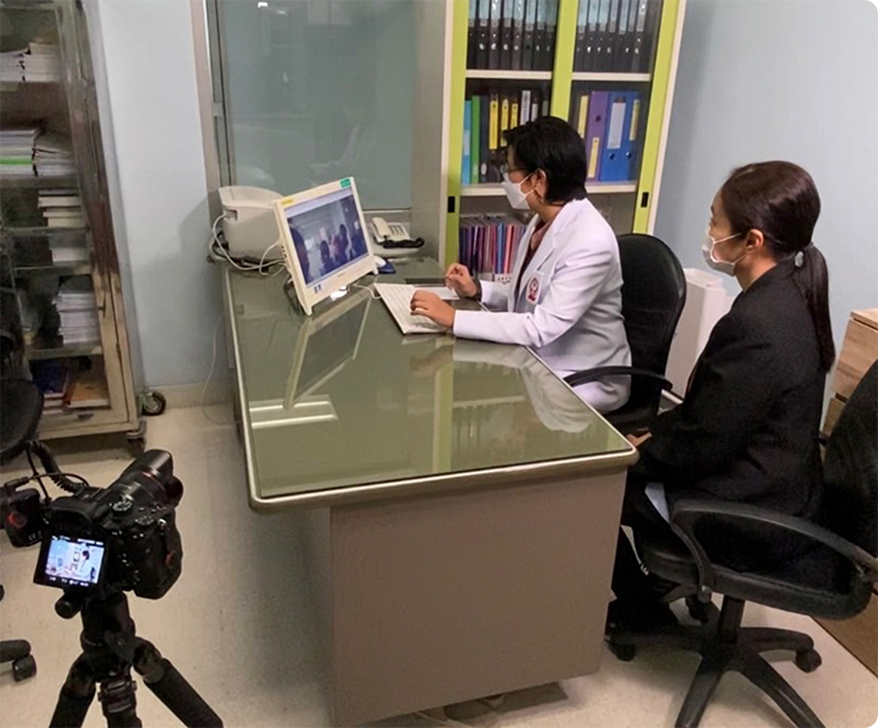
“TELEMEDICINE System at Phra Nakhon Si Ayutthaya Hospital” Telehealth Center
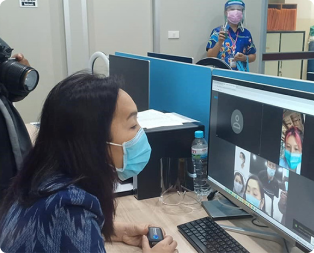
“TELEMEDICINE System at Phra Nakhon Si Ayutthaya Hospital” Dr. Saowalak Chaow Phonthong, a nephrologist, provides patient care during the COVID-19 period using the TELEMEDICINE system.
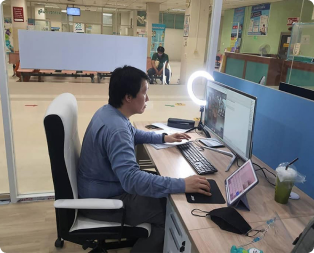
“TELEMEDICINE System at Phra Nakhon Si Ayutthaya Hospital” Dr. Thattree Bosritthiphichet, a family medicine practitioner, cares for inmates with chronic conditions in correctional facilities using the TELEMEDICINE system.
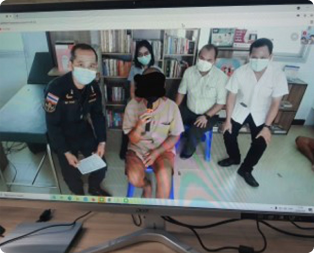
“TELEMEDICINE System at Phra Nakhon Si Ayutthaya Hospital” Patient care for inmates with chronic conditions in correctional facilities using the TELEMEDICINE system.
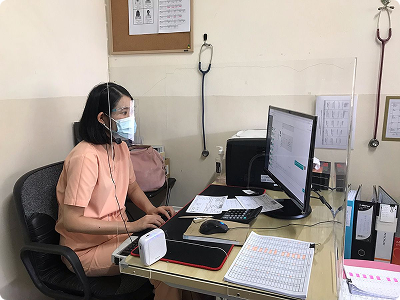
Dr. Oranicha Amraariyakul, an endocrinologist and metabolism specialist at Phutthasothorn Hospital, provides TELEMEDICINE services to pregnant patients with diabetes
Pregnant patients with diabetes often need to travel to meet with a physician regularly to monitor their blood sugar levels. They must also receive education on self-care, managing carbohydrate intake, aligning it with blood sugar levels, and administering insulin injections as prescribed. Traveling to the hospital can pose a risk of exposure to COVID-19 and other diseases, increasing costs and time spent.
Phutthasothorn Hospital, a government hospital in Chachoengsao province, located in the eastern region of Thailand, with a capacity of 585 beds, has implemented TELEMEDICINE by Dietz for the care of pregnant patients with diabetes (Type 1 or Type 2 requiring insulin injections). Patients who are assessed as suitable for remote monitoring through the Dietz Telemedicine system send data, including blood sugar levels, insulin doses, dietary intake, and carbohydrate consumption, via the Dietz system before their scheduled weekly appointments (usually on Mondays).
When the appointment time arrives, the physician reviews the submitted data, analyzes the treatment, and provides guidance through a convenient chat system. Patients do not need to travel to the hospital, and the healthcare team can offer guidance on patient self-management. Dietitians can provide advice on dietary intake and nutrition, and pharmacists can provide guidance on medication usage for patients.
Telemedicine connects primary care units with specialized hospitals in the Roi Et province. For example, Roi Et Hospital collaborates with local community hospitals such as Suwannaphum Hospital, Phon Thong Hospital, and Selaphum Hospital. They utilize the TELEMEDICINE system to provide medical care for patients recovering from various medical conditions, including neurological disorders and chronic diseases such as kidney disease and diabetes, along with palliative care. This allows patients to conveniently and quickly access specialist doctors without the need to travel to Roi Et Hospital in the city but rather effectively monitor their condition at nearby community hospitals.
Remote Medical System Test Image
Between Roi Et Hospital and Surin Hospital, which are more than 54 kilometers apart, patients used to have to travel to Roi Et Hospital for medical consultations. However, since adopting remote medical services, patients can receive care at Surin Hospital, meeting with the specialized physicians scheduled by Roi Et Hospital.
This announcement sets the standards for private healthcare facilities to provide services using telemedicine, ensuring the safety of service recipients in healthcare facilities. Authorized recipients and operators of healthcare facilities must submit an application for additional telemedicine services to provide services developed within healthcare facilities to authorized recipients, following the application format provided in form S.P. 16.
This announcement emphasizes online clinics and the provision of care through remote medical services, or telemedicine. Such activities must be carried out exclusively through healthcare facilities. The provision of care through remote medical services or telemedicine must comply with specified criteria, such as the standards for medical professionals set by the Medical Council in 2012 and the knowledge and ability criteria for obtaining a medical professional license in 2012, as amended in 2020. The guidelines and regulations provided by the Medical Council should be followed, as well as any legal requirements that may apply to specific cases. It should be noted that consultations between medical professionals or other public health personnel, governed by separate laws, do not constitute the provision of remote medical care. Providers and recipients of remote medical care must be aware of technological limitations and electronic risks. Activities carried out through information systems are inherently subject to information system risks. Therefore, they should be conducted within information systems that meet international standards and security requirements for information systems. These systems should be ready for use and subject to regular inspection. Information systems used for telemedicine must comply with information security standards and be in accordance with the Electronic Transactions Act of 2019 and the Personal Data Protection Act of 2019, as well as other relevant laws and regulations.
This announcement defines Telepharmacy as the provision of Pharmaceutical care and services related to patients or service recipients by professional pharmacists communicating with patients or service recipients through telecommunication technology. It also includes the delivery of medication, with details specified in the announcement. These details encompass standards for Telepharmacy services and the procedures for remote pharmacy practice by pharmacists. The announcement covers cases in healthcare facilities, cases for pharmacies that have received medication orders, and cases for pharmacies providing services without medication orders.
The definition of “Tele-nursing” is provided in this announcement, which refers to nursing and midwifery services for consultation and problem-solving related to health within the framework of professional nursing and midwifery knowledge, utilizing digital systems to deliver services. The responsibility of Tele-nursing providers is outlined.
Tele-nursing services involve the following components: healthcare facilities providing Tele-nursing services, Tele-nursing providers, recipients of Tele-nursing care, and guidelines for Tele-nursing practices. These guidelines include identity verification of Tele-nursing providers and recipients under the information standards of the healthcare facility, assessing Tele-nursing recipients through a review of their medical history, additional health assessments, data analysis, and nursing diagnosis. This involves evaluating symptoms, severity, limitations, and conditions for professional practice, in accordance with criteria specified by the Nursing Council.
Planning nursing care and providing nursing care based on data analysis are also included in the Tele-nursing guidelines. Documenting Tele-nursing care provided to recipients and evaluating the outcomes of Tele-nursing are part of the process. Referrals are coordinated when it is determined that Tele-nursing recipients should seek care in healthcare facilities appropriate for their condition or health issues.
Consultations between nursing and midwifery professionals and other public health personnel, governed by separate laws, are not considered Tele-nursing as defined in this announcement.
“Tele-Medical Labs” refers to a form of medical technology service provided to service recipients by professional medical technologists in healthcare facilities, using telecommunication technology to exchange information and communicate with patients or service recipients for the purpose of reporting test results, interpreting test results, and providing pre- and post-examination consultation for diagnosis, treatment follow-up, health assessment, and health promotion. This includes guidance to service providers on self-testing for specific test kits that have been authorized for distribution according to the law, such as using a blood glucose monitor and pregnancy tests. The provision of this service excludes cases involving critically ill patients.
The service standards for Tele-Medical Labs stipulate that services must be provided by professional medical technologists. Service recipients must provide their consent to receive Tele-Medical Labs services, which can be documented through voice recordings or other means. The healthcare facility must establish a patient registration system and maintain records of patient history and service provision.
The service should be equipped with telecommunication technology that allows communication between service providers and service recipients. The service should also have a data recording system for voice or video during service provision. This system should protect the confidentiality of patient information, ensuring that medical technologists, who have received consent from the service recipient, can access the information.
Reporting test results can be done electronically through telecommunications systems, while verbal reports made over the phone must have corresponding electronic files to prevent communication errors.
For self-testing guidance, it should include steps for self-testing, precautions, result interpretation, quality control of test results, and any related documentation, if applicable.
“Tele-Physical Therapy” refers to a system that uses digital technology to provide physical therapy services remotely, allowing the exchange of useful data for consultation, examination, diagnosis, treatment, disease prevention, health promotion, and physical recovery. It also serves the continuous education of physical therapy professionals.
Key points to summarize:
- Tele-Physical Therapy services must be provided during authorized working hours and patients should receive ongoing care from the same provider on their first visit.
- Tele-Physical Therapy services should adhere to the standards set by the Ministry of Public Health regarding telemedicine services (issued in 2021), as well as the regulations from the Physical Therapy Council concerning the limitations and conditions of practicing physical therapy (issued in 2008), the code of ethics for physical therapy professionals (issued in 2017), and the standards for physical therapy services (issued in 2010).
- Both providers and patients must confirm their identities and their registration status under the information services standards defined by the relevant state authority.
- The service must have a system to record audio, still images, or video during the provision of Tele-Physical Therapy services. Consent from the patient must be obtained each time.
The guidelines for providing Tele-Physical Therapy services are as follows:
a. Collect the patient’s medical history, inquire about relatives or caregivers, and gather necessary information for the service. b. Assess the data, identify issues, and search for relevant risks in various aspects. c. Plan and provide physical therapy advice by evaluating related risks. d. Refer patients to receive other necessary medical examinations and treatment when required.
Tele-Physical Therapy systems should meet information security standards and comply with relevant electronic transaction laws and personal data protection laws.
Thai Traditional Telemedicine or Thai Traditional Medicine via Telemedicine: This refers to the transmission or communication of content related to Thai Traditional Medicine by Thai Traditional Medicine practitioners, whether from public or private healthcare facilities, from one location to another using electronic means. It is intended for medical consultation, advice, or the practice of Thai Traditional Medicine within the framework of medical knowledge, circumstances, and events that are present.
Electronic Means: This means the application of electronic methods, electromagnetic waves, or other similar methods, or the use of electronic data and includes applications of light, electromagnetic waves, voice, images, or devices related to the application of various methods using electronic technology.
Healthcare Facility: This refers to healthcare facilities established according to the relevant laws, whether public or private.
Provision of Care via Thai Traditional Telemedicine or Thai Traditional Medicine via Telemedicine (Thai Traditional Telemedicine): It means carrying out medical activities using Thai Traditional Telemedicine or Thai Traditional Medicine via Telemedicine (Thai Traditional Telemedicine).
Provider: It refers to Thai Traditional Medicine practitioners or practitioners of Thai Traditional Medicine applications, whether from public or private healthcare facilities, who provide care using Thai Traditional Telemedicine or Thai Traditional Medicine via Telemedicine (Thai Traditional Telemedicine) for other individuals for the practice of Thai Traditional Medicine. This is done within the scope of medical knowledge, under the responsibility of the provider or the communication of medical content.
Online Clinic: Refers to healthcare facilities as prescribed by the law.
Care: This means the medical activities in accordance with the provisions of Article 4 and the standards of Thai Traditional Medicine Practitioners in 2020, as well as the knowledge and skills standards for obtaining a license to practice Thai Traditional Medicine in 2014 and its amendments.
Requirements for Providing Care via Thai Traditional Telemedicine or Thai Traditional Medicine via Telemedicine (Thai Traditional Telemedicine): Care provision must comply with:
- The standards for Thai Traditional Medicine Practitioners in 2020 and the standards for Thai Traditional Medicine Practitioners in 2020.
- Knowledge and skill requirements for obtaining a license to practice Thai Traditional Medicine in 2014 and its amendments.
- Other criteria or guidelines prescribed by the Council of Thai Traditional Medicine in accordance with the framework of medical professional laws and their amendments.
Obligations for the Provider of Care:
- They must follow medical practices according to Article 4 strictly.
- They should learn necessary techniques, as well as the limitations of Thai Traditional Telemedicine or Thai Traditional Medicine via Telemedicine (Thai Traditional Telemedicine).
Provider of Care and Recipient of Care should be aware of and be informed of technological and electronic limitations. This includes the following:
- Medical facts according to patient rights and the disclosure of patient information specified in the announcement made on August 12, 2015, and other medical facts that may arise in the future.
- The patient’s right to refuse to use Thai Traditional Telemedicine or Thai Traditional Medicine via Telemedicine (Thai Traditional Telemedicine).
- The use of devices, programs, or artificial intelligence (AI) in conjunction with Thai Traditional Telemedicine or Thai Traditional Medicine via Telemedicine (Thai Traditional Telemedicine) should be in accordance with specific laws, such as medical device laws and drug laws.
**In addition to the limitations mentioned in Article 6, the Council of Thai Traditional Medicine shall also issue additional medical facts as required. For example, the expert’s opinion and the patient’s rights in refusing to use Thai Traditional Telemedicine or Thai Traditional Medicine via Telemedicine (Thai Traditional Telemedicine).
**The use of tools, programs, or artificial intelligence (AI) in conjunction with Thai Traditional Telemedicine or Thai Traditional Medicine via Telemedicine (Thai Traditional Telemedicine) must adhere to specific laws. For example, laws related to medical devices, drug laws, etc.
Online clinics and the provision of care via Thai Traditional Telemedicine or Thai Traditional Medicine via Telemedicine (Thai Traditional Telemedicine) must be carried out only through healthcare facilities.
Interactions between Thai Traditional Medicine practitioners and other public health personnel under other laws are not considered as Thai Traditional Telemedicine or Thai Traditional Medicine via Telemedicine (Thai Traditional Telemedicine) provided in this announcement.
Interested in trying to use DIETZ TELEMEDICINE, which is in line with the mentioned announcement? Or have further questions, please contact phongchai@dietz.asia or sale@dietz.asia.